Last year, I was fortunate enough to spend an hour talking with Doug Brooks, the former CEO and chairman of Brinker International.
Of everything we discussed, one thing has stayed with me:
CEO = Change Equals Opportunity.
At the time, I understood it as a business lesson. Companies change. Markets change. People change. A good CEO recognizes what that change makes possible.
But over the past year, I've started thinking about those words differently.
Not as a way to run a company, but as a way to think about my life.
Staying the same is also a decision
We spend a lot of time evaluating the risk of change.
What if I send the email and don't get a response? What if I apply and get rejected? What if I try something and fail?
We spend less time considering the risk of doing nothing.
Staying the same is also a decision.
Growing up, I heard that I was "street smart," but I wasn't really a "school person." My grades in high school gave me plenty of evidence to believe it.
Then I got to college and decided I didn't want that story anymore.
I decided to become a school person.
I didn't suddenly become smarter. I changed my habits, how seriously I took school, and the standard I held myself to. Eventually, the evidence I had about myself changed too.
That experience made me skeptical of the phrase "I'm just not..."
Sometimes the things we accept as identities are really patterns we've repeated long enough to mistake for permanent parts of ourselves.
And patterns can change.
Why does success feel so lonely?
There was another part of changing that I wasn't prepared for.
My first year of college, I remember calling my mom crying and asking her:
Why does success feel so lonely?
I knew how hard I wanted to work. No one was forcing me to—the pressure came from me.
Once I knew what I thought I was capable of, it became hard to ignore when my decisions weren't aligned with the person I wanted to become. Disappointing my future self was a feeling I couldn't shake.
I remember telling my mom that the path I was choosing felt lonely, but I knew I had to keep going. I didn't know exactly where it would lead. I just knew I would disappoint myself if I didn't find out.
For a while, I thought loneliness was simply one of the costs of ambition.
I don't anymore.
I think sometimes growth is lonely before you find the people growing in the same direction.
Some of my best friends today are people I've met through the Ole Miss Business Club. I've found people who are curious, ambitious, supportive, and excited about what they're building—people who push me to think bigger without making me feel like I have to choose between working toward something and having people to share my life with.
The work didn't necessarily get easier.
It stopped feeling like I was doing it alone.
Freshman year, I thought my environment was something I simply had to adapt to. I didn't understand that I could change it—or even help build a new one.
Sometimes change doesn't mean becoming less ambitious so you fit into the room you're already in.
Sometimes it's finding—or building—a different room.
The people around us influence more than our behavior. They influence what we believe is reasonable to attempt.
Changing your environment doesn't necessarily change who you are.
Sometimes it gives you permission to become more of who you already wanted to be.
Admire. Inspire.
About three years ago, my psychiatrist gave me two words:
Admire. Inspire.
My interpretation has become simple:
Pay attention to who you admire. Then do something with that information.
I've started thinking of admiration as information. The people we admire can reveal what we value before we know how to articulate it ourselves.
Maybe it's the way someone leads. The company they built. Their discipline. Their confidence. Their relationships. The risks they took.
Ask yourself why you admire it. Then ask yourself what you can learn from it.
For me, that eventually led to cold emailing people I admired.
My thought process was simple: Why not?
If someone has built a business I find fascinating, why wouldn't I ask them how they did it? If someone has a career I could learn from, why wouldn't I reach out?
There is a difference between believing you're entitled to someone's time and simply being willing to ask for it.
I'm not entitled to a response.
But I'm allowed to send the email.
Most cold emails lead nowhere. But sometimes someone responds. An email becomes a conversation, and a conversation introduces an idea you're still thinking about a year later.
That's exactly what happened with Doug.
The conversation that taught me Change Equals Opportunity only happened because I was willing to create a little change myself.
I sent the email.
What do I owe my future self?
I used to think working hard was my only option.
It wasn't.
I could have lowered the standard. I could have stopped putting myself in uncomfortable situations. I could have changed direction because, for a while, it felt lonely.
I kept choosing not to.
That doesn't mean every hour needs to be productive or every decision needs to optimize for achievement. Some of the most valuable parts of my life produce nothing measurable at all.
But I've learned that I know the difference between resting and avoiding. I know the difference between enjoying where I am and repeatedly making choices that move me away from where I want to go.
Maybe being the CEO of your life isn't about always choosing the hardest option.
Maybe it's simply recognizing that you are choosing.
And eventually, your future self inherits those decisions.
Change Equals Opportunity
The longer I've thought about Admire. Inspire. and Change Equals Opportunity, the more connected they've become.
Admire the people who make you think differently about what's possible.
Figure out what you admire about them.
Let it inspire you.
Then be willing to change something.
Three years ago, someone told me to pay attention to who I admire and let it inspire me.
Last year, someone I admired told me that change equals opportunity.
That conversation happened because I had already started living the lesson before I had words for it.
And the loneliness I once thought might be the price of the path I had chosen eventually led me toward some of the people I value most.
I don't think success has to be lonely anymore.
Sometimes you just haven't found your people yet.
And sometimes you have to be willing to change your environment without changing your direction.
Admire. Inspire. Change.
Then see what becomes possible.

Pictured (left to right): Hailey Helterbran, Haiden Hersey, Abigail (Abby) Goldsworthy
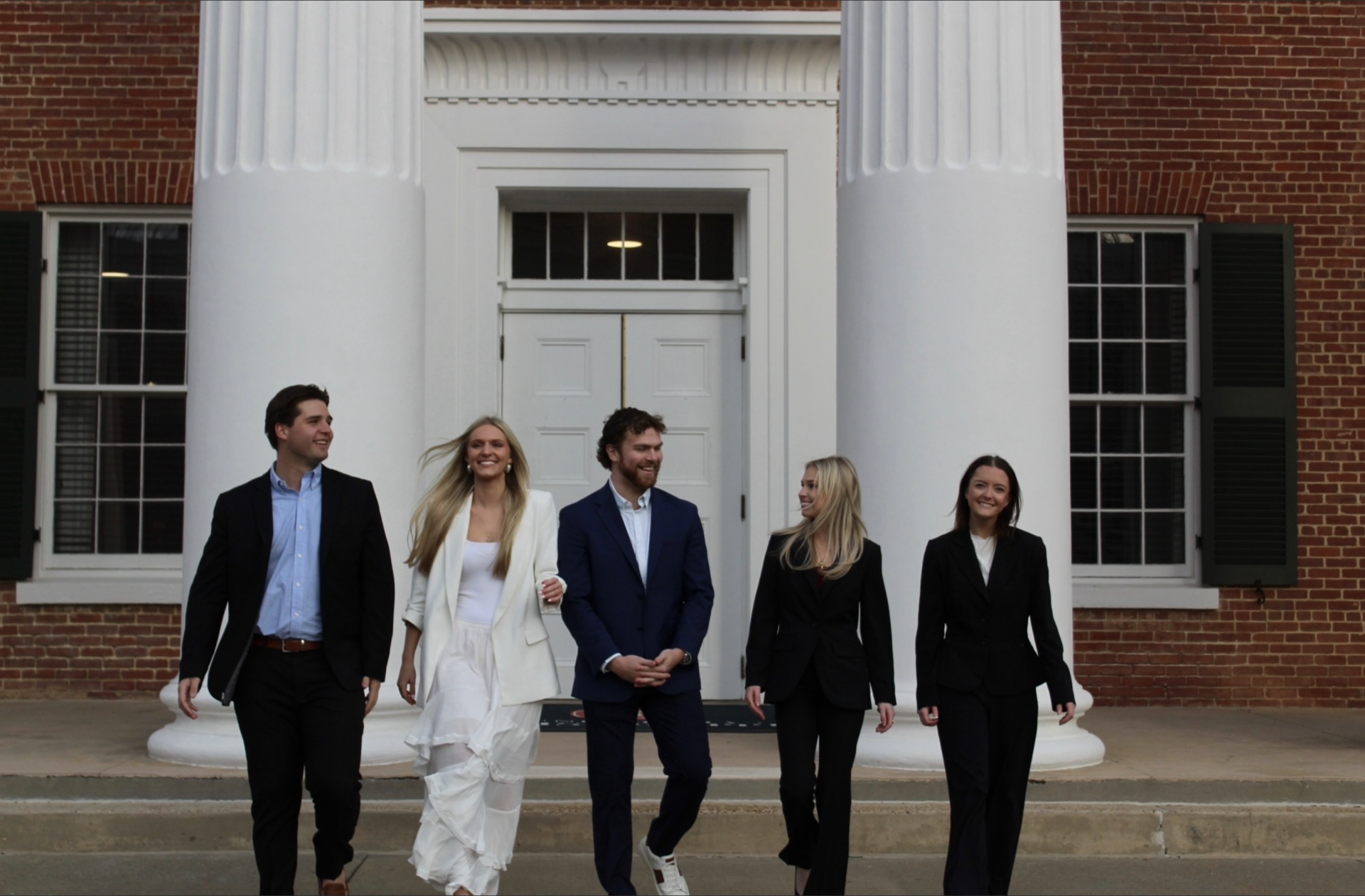
Pictured (left to right): Bennett Jung, Haiden Hersey, Luke Johnson, Abigail (Abby) Goldsworthy, Hailey Helterbran
Add comment
Comments